
In 2026, artificial intelligence is becoming a valuable tool in fertility laboratories around the world. In head‑to‑head tests, AI alone achieved 66% accuracy in selecting viable embryos compared with 38% accuracy for embryologists working alone, highlighting how advanced data analysis can support better decision‑making during IVF.
Key Takeaways
| Common Question | Clear Answer |
|---|---|
| What is AI‑enhanced embryo selection? | It uses artificial intelligence to analyze embryo images and developmental data to help embryologists identify embryos with the highest potential for implantation. |
| Does AI improve IVF success rates? | Many clinics report improved outcomes when AI is combined with expert embryology. You can learn more about factors affecting outcomes in our guide to IVF success rates. |
| Where can patients learn about treatment options? | Our directory provides a practical overview of care pathways, including this detailed resource on infertility treatment options. |
| Does age still matter with AI selection? | Yes. AI can help identify stronger embryos, but egg quality still changes with age. Explore more in our age and fertility guide. |
| Is AI used in all fertility clinics? | No. Adoption is growing but not universal, which is why researching clinics carefully is important. See our advice on how to find the best fertility clinic. |
| Where can I explore assisted reproductive technologies? | You can review technologies and treatments within our curated section on assisted reproductive technology. |
1. Understanding AI‑Enhanced Embryo Selection
AI‑enhanced embryo selection uses machine learning models to analyze thousands of embryo images and developmental patterns. These systems help embryologists identify which embryos may have the highest chance of implantation.
Instead of relying only on visual grading, AI evaluates subtle patterns in cell division timing, morphology, and developmental speed. This combination provides another layer of evidence during embryo selection.
For many couples navigating IVF, the goal is simple. Choose the embryo most likely to lead to a healthy pregnancy while reducing unnecessary treatment cycles.
We view these tools as supportive technologies that complement medical expertise rather than replace it.


2. How Artificial Intelligence Evaluates Embryo Quality
AI systems typically analyze time‑lapse images collected during embryo incubation. These images capture the entire development process from fertilization to the blastocyst stage.
Algorithms evaluate multiple characteristics simultaneously, often more consistently than manual observation. The goal is not speed alone but improved prediction accuracy.
- Cell division timing
- Blastocyst expansion patterns
- Morphological symmetry
- Fragmentation levels
- Development speed
This structured analysis helps clinics rank embryos according to predicted implantation potential.
3. Why IVF Clinics Are Turning to AI in 2026
IVF success depends heavily on selecting the embryo with the best developmental potential. Even small improvements in selection accuracy can influence treatment outcomes.
Artificial intelligence offers consistent evaluation based on large training datasets. This reduces subjectivity that can occur with traditional embryo grading.
Many clinics also report workflow improvements. AI tools can rapidly analyze thousands of images, allowing embryologists to focus on complex laboratory procedures.
For patients, the main benefit is clarity. Data‑driven predictions can help guide expectations and treatment planning.
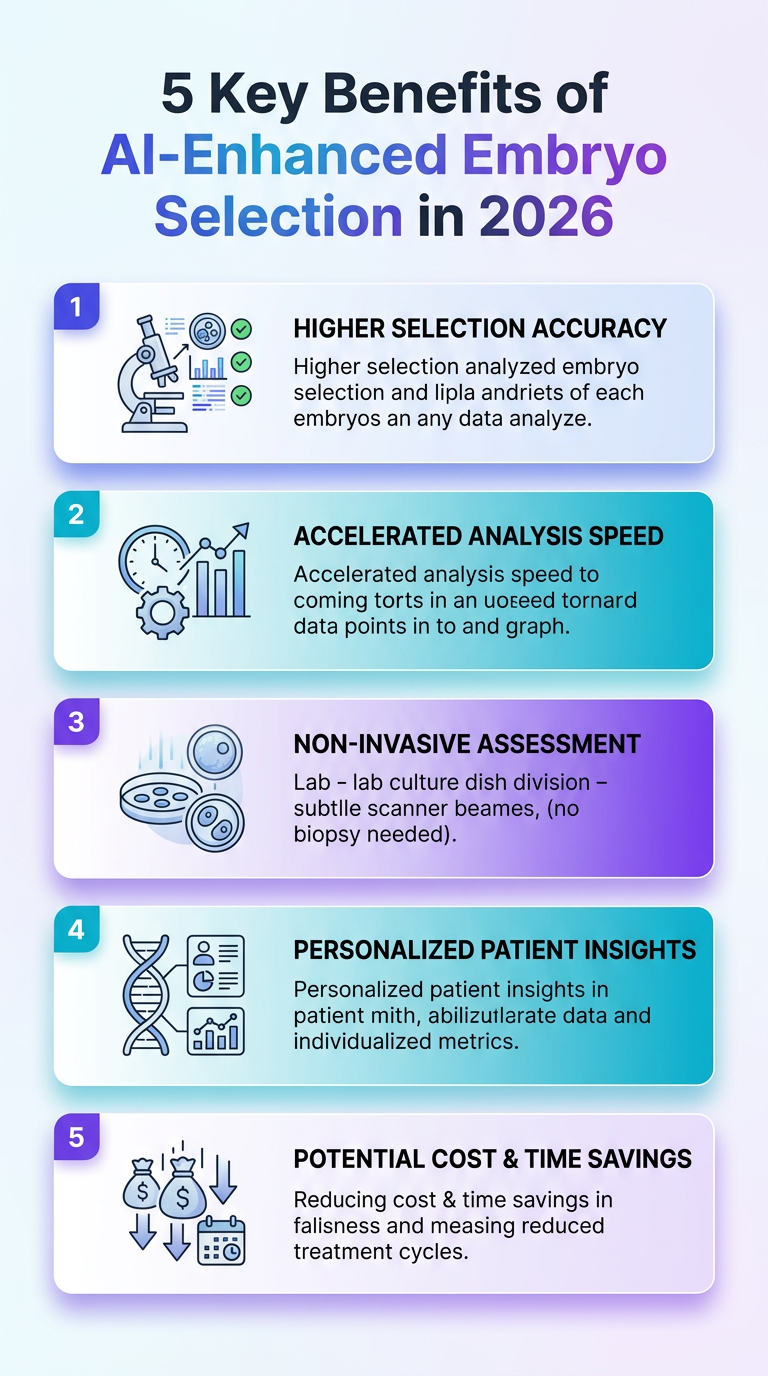
This infographic highlights five benefits of AI-enhanced embryo selection in 2026, including improved accuracy, faster decision-making, and data-driven ethics. A concise visual guide for readers exploring advances in reproductive technology.


4. How AI Improves IVF Success Rates
AI can improve embryo ranking by combining imaging data with patient information such as age, hormone levels, and medical history. This broader view supports more personalized treatment planning.
Clinics using AI tools often report measurable improvements in pregnancy outcomes. While results vary, the trend toward data‑supported decision‑making continues to grow in 2026.
Did You Know?
AI-assisted embryo selection improves overall IVF success rates by 15% to 20% compared to traditional manual grading methods.
This improvement may reduce the number of cycles needed for pregnancy. Fewer cycles can mean lower emotional strain and lower cumulative treatment costs.


5. The Role of Embryologists in an AI‑Supported Lab
Artificial intelligence does not replace trained embryologists. Instead, it provides a decision‑support tool that strengthens laboratory assessments.
Embryologists review AI predictions alongside traditional grading and genetic testing results. Human expertise remains essential for interpreting complex biological factors.
AI tools provide additional insights, but the final decision about embryo transfer always remains a clinical one.
This collaborative approach ensures technology enhances, rather than replaces, patient‑centered care.

6. Ethical Considerations of AI in Reproductive Medicine
Fertility technology always requires careful ethical oversight. AI introduces new questions about data transparency, algorithm bias, and patient consent.
Clinics must clearly explain how AI recommendations are generated. Patients deserve to understand how technology contributes to decisions about their embryos.
Responsible clinics follow strict data privacy standards and maintain human oversight during every stage of treatment.
As a directory, we encourage patients to discuss these issues openly with their fertility specialists before treatment begins.
7. Costs and Accessibility of AI‑Assisted IVF
In 2026, AI tools are gradually becoming integrated into standard IVF laboratory workflows. However, access may still vary between clinics.
Some clinics include AI analysis as part of their standard IVF package. Others offer it as an optional laboratory add‑on.
| Cost Factor | Typical Impact |
|---|---|
| AI embryo analysis | Often included or added as a lab technology fee |
| Embryo transfer procedures | Standard IVF treatment cost component |
| Genetic testing | Optional testing that may complement AI analysis |
Understanding what is included in your clinic’s pricing structure can help you make informed decisions.
8. Adoption of AI in Fertility Clinics Worldwide
Artificial intelligence adoption is increasing steadily across fertility centers. Advanced clinics now integrate AI software directly into time‑lapse incubator systems.
Did You Know?
As of early 2026, approximately 29.2% of fertility clinics have officially adopted AI into their routine clinical practice.
While adoption is growing, many clinics are still evaluating the technology. Infrastructure costs and staff training can influence how quickly clinics implement these tools.
Patients exploring treatment options should ask clinics whether AI‑supported embryo assessment is available.
9. What Patients Should Ask Before Choosing an AI‑Enabled Clinic
Not all AI systems are identical. Clinics may use different algorithms, datasets, or embryo imaging technologies.
As you explore treatment options, consider asking your clinic the following questions:
- Is AI used to analyze embryo development?
- Does the system combine imaging with patient medical data?
- How are AI recommendations reviewed by embryologists?
- Are success rates tracked with and without AI assistance?
Clear answers help you evaluate how technology supports your treatment plan.
10. The Future of AI‑Driven Fertility Care
Research teams continue to improve AI models using larger clinical datasets. These models increasingly combine embryo imaging with genetic and patient health data.
Future systems may predict not only implantation potential but also long‑term pregnancy outcomes. This could help clinics personalize IVF strategies more effectively.
We expect continued growth in data‑driven reproductive medicine in 2026 and beyond. However, patient trust, transparency, and medical oversight will remain essential.
Technology can support fertility care, but compassionate guidance from experienced specialists remains at the center of the journey to parenthood.
Conclusion
AI‑enhanced embryo selection is becoming one of the most promising innovations in reproductive medicine in 2026. By combining advanced algorithms with the expertise of embryologists, clinics can make more informed decisions during IVF.
For individuals and couples navigating fertility care, access to clear and trustworthy information matters. Our role is to provide resources that help you explore treatment options, compare clinics, and move forward in your fertility journey with confidence.
All information presented here is for educational purposes. Always consult a qualified fertility specialist before making decisions about medical treatment.
